I have replaced the signals with LED 7443 bulbs due to which the blinking speed has increased. Even after purchasing load resistors and connecting them - i see no significant change in the blinking speed, it should have reduced. The following is done
1) separate resistors for the rear signals, not any connected resistors to the front
2) The resistors do get hot which means they are connected.
So..
1) Any ideas on the correct resistance requried ?
2) Do i need to connect resistors to the front also ?
3) whats missing ?
[image: View Post]AnikMankar, on 31 October 2009 - 11:12 PM, said:
Hi
I have replaced the signals with LED 7443 bulbs due to which the blinking speed has increased. Even after purchasing load resistors and connecting them - i see no significant change in the blinking speed, it should have reduced. The following is done
1) separate resistors for the rear signals, not any connected resistors to the front
2) The resistors do get hot which means they are connected.
So..
1) Any ideas on the correct resistance requried ?
2) Do i need to connect resistors to the front also ?
3) whats missing ?
[image: View Post]AnikMankar, on 31 October 2009 - 11:12 PM, said:
Hi
I have replaced the signals with LED 7443 bulbs due to which the blinking speed has increased. Even after purchasing load resistors and connecting them - i see no significant change in the blinking speed, it should have reduced. The following is done
1) separate resistors for the rear signals, not any connected resistors to the front
2) The resistors do get hot which means they are connected.
So..
1) Any ideas on the correct resistance requried ?
2) Do i need to connect resistors to the front also ?
3) whats missing ?
Thanks All
I replaced all my bulbs in my '99 with LED bulbs and I found a relay in an auto parts store that I was able to adapt to the VFR in order to make it blink properly. Here in the US I was able to use the Tridon EP-35 from a local parts store and attach wires and a plug to mate it to my VFR. Here is some more detail in my original post:
My link
Thanks for your replies.
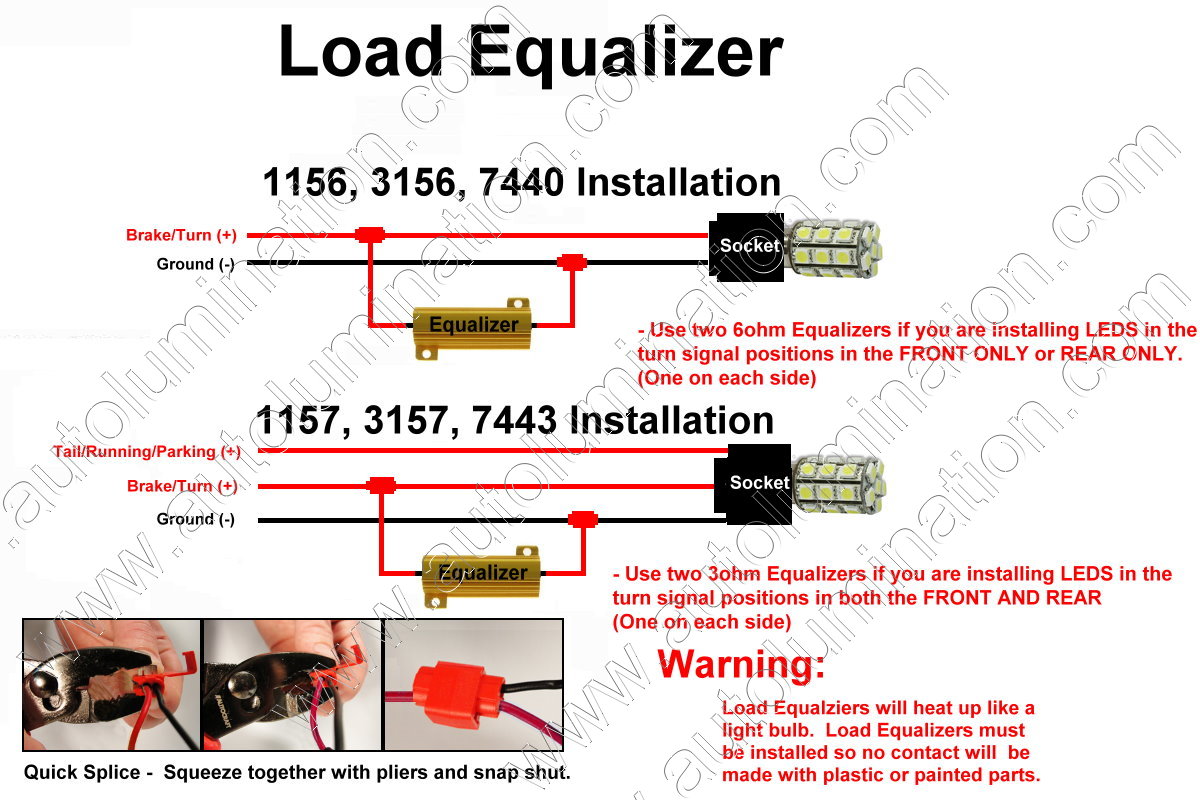
I have actually put the 18LED bulbs both front and back. the resistors i bought are 6 Ohm/50 Watt load resistors.
Think i may need a higher load resistors ?
Thanks
According to Superlumination, 6 ohms are what is recommended.
I eventually went with a flashing relay change. A tab trim and I even managed to install it with Honda's plug and it's held in place with their rubber retainer. Here :warranty:
An example of the flashing rate: :491: [image: Posted Image]
Looks like will need 3ohm not 6ohms based on the installation link. 6 ohms are needed only if one of the sets are replaced (back or front), if all 4 are replaced i will need 3ohms.
Skip the load resistors and by an LED flasher from superbrightleds.com, Simple plug and play installations. Works great on my VTR, I've got LED turn signals front an rear.
[image: View Post]Daniel Paul, on 02 November 2009 - 01:34 AM, said:
Skip the load resistors and by an LED flasher from superbrightleds.com, Simple plug and play installations. Works great on my VTR, I've got LED turn signals front an rear.
I have to echo the advice about going with an electronic flasher unit.
I think load equalizers/resistor packs are a waste -- literally. All the [now]excess power you're saving by using LEDs is literally being burned off just to maintain a flash rate. Plus, I'm not too keen on the idea of putting little heater packs somewhere on the bike.
To me, resistor packs/load equalizers are the old way of doing things. Definitely get an electronic flasher relay! :fing02:
I have placed an order for the LED flasher - will keep you'll posted on how it goes ....in the mean time will have stick around with the high "flashing"... :goofy:
End of thread · 13 posts recoveredWayback Machine snapshot 30 Dec 2010
![[image: Posted Image]](http://i143.photobucket.com/albums/r124/VEEFER/Talk%20Time/th_8329ee32.jpg)
![[image: Posted Image]](http://www.superbrightleds.com/images/products/car/Flashers/moto_FLAT.jpg)